Most Chester County homeowners assume planting season ends when summer does. In practice, fall tree and shrub planting Chester County PA is one of the most effective things you can do for your landscape, and October is right in the middle of the optimal window. The biology behind it is straightforward: cooler air temperatures reduce stress on new plants while the soil is still warm enough to encourage root growth. That combination does not exist in spring or summer.
This guide explains why fall works so well for planting, which trees and shrubs suit southeastern PA properties, and what good site assessment, placement, and bed preparation look like in practice.
Why Does Fall Planting Work So Well in Southeastern PA?
Chester County sits in USDA Hardiness Zone 6b to 7a. Soil temperatures at that latitude stay warm well into October, even as air temperatures begin to cool in earnest. For newly planted trees and shrubs, that warm soil is the key ingredient: it keeps root growth active at precisely the moment when the plant's above-ground energy demands have dropped. There is no canopy to support, no summer heat to fight through, and no competing demand for water during establishment.
According to Penn State Extension, container-grown trees and shrubs can be planted from early to mid-fall, provided there is at least six weeks before the first frost for the root system to establish itself. In Chester County, that window runs comfortably through mid-October for most species, and into early November for hardy varieties.
A tree or shrub planted in October and watered through the fall arrives at spring with an established root system, ready to channel energy into above-ground growth from the first warm day. The same specimen planted the following April is starting that root development process in warming soil while simultaneously pushing out new leaves — a harder assignment for the plant, and a slower start for you.
What to Plant in Chester County This Fall
Not every species handles fall planting equally well. The strongest candidates are container-grown trees and shrubs whose root balls are intact and whose species are well suited to the Mid-Atlantic climate. Here is what tends to perform best:
Deciduous Trees
Oaks, maples, dogwoods, serviceberry (Amelanchier), and native river birch are all well suited to fall planting in Chester County. These species go into dormancy naturally in autumn, which means transplant stress is lower and root establishment has the full window of warm soil to work with before the ground hardens.
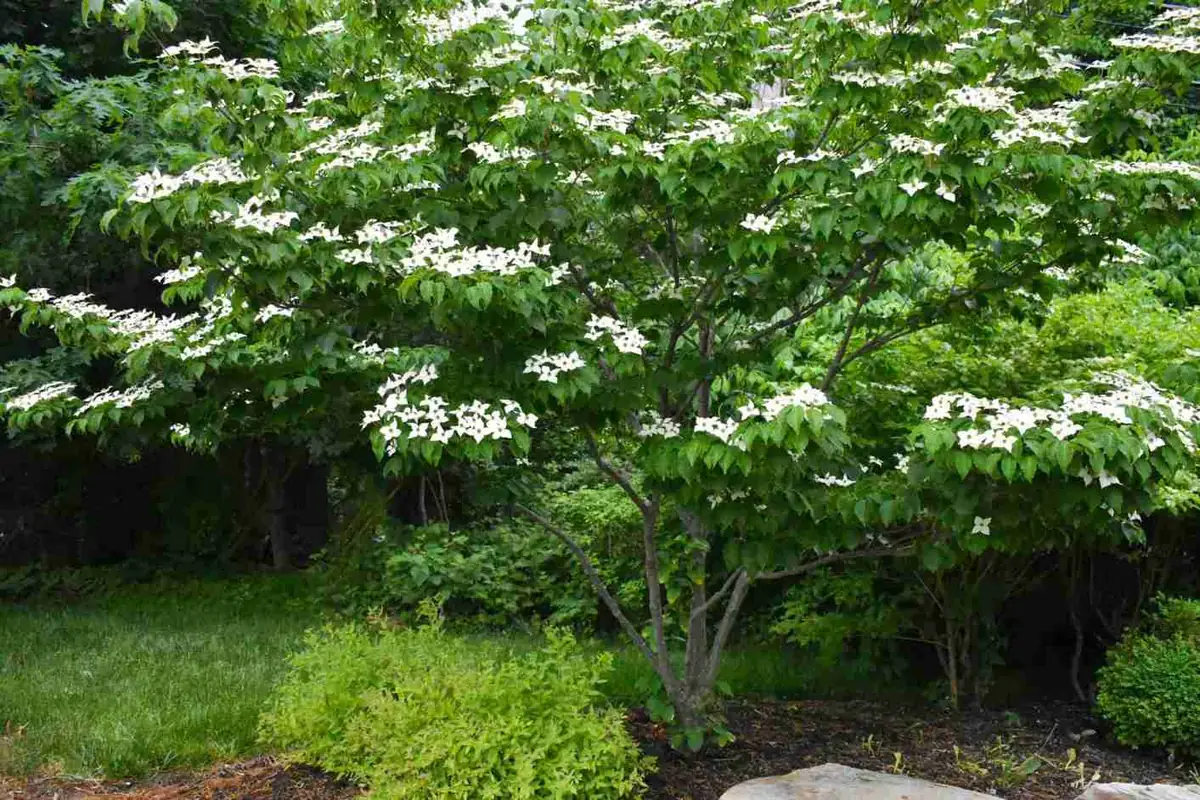
Flowering deciduous trees, including redbud (Cercis canadensis), fringe tree (Chionanthus virginicus), and ornamental cherries, are also good fall candidates and are among the most rewarding additions to a Chester County property — particularly when planted in positions where their spring display will be visible from the house or street.
Evergreen Trees and Shrubs
Broadleaf evergreens including holly, mountain laurel, rhododendron, and boxwood can be planted in early fall in southeastern PA, but benefit from being in the ground a little earlier than deciduous plants — ideally by late September to mid-October — to allow time to establish before winter desiccation becomes a concern. Penn State Extension's guide to evergreen trees and shrubs for Pennsylvania is a useful reference for matching species to site conditions across the region.
Needle evergreens including arborvitae, spruce, and pine are also fall-plantable, though they benefit from the same early timing as broadleaf evergreens. Adequate mulching at planting is particularly important for evergreens to protect the root zone through winter.
Ornamental Shrubs
Viburnum, spirea, clethra (summersweet), native witch hazel, and callicarpa (beautyberry) are all excellent fall planting choices for Chester County landscapes. Many of these offer multi-season interest, with summer flowers, autumn foliage, and winter berries or structure that contribute to year-round landscape appeal.
For HOA and commercial properties across the region, mass planting of structural shrubs in fall is one of the most cost-effective landscape investments, establishing a framework that fills in quickly the following spring.
What Good Site Assessment Looks Like Before Planting
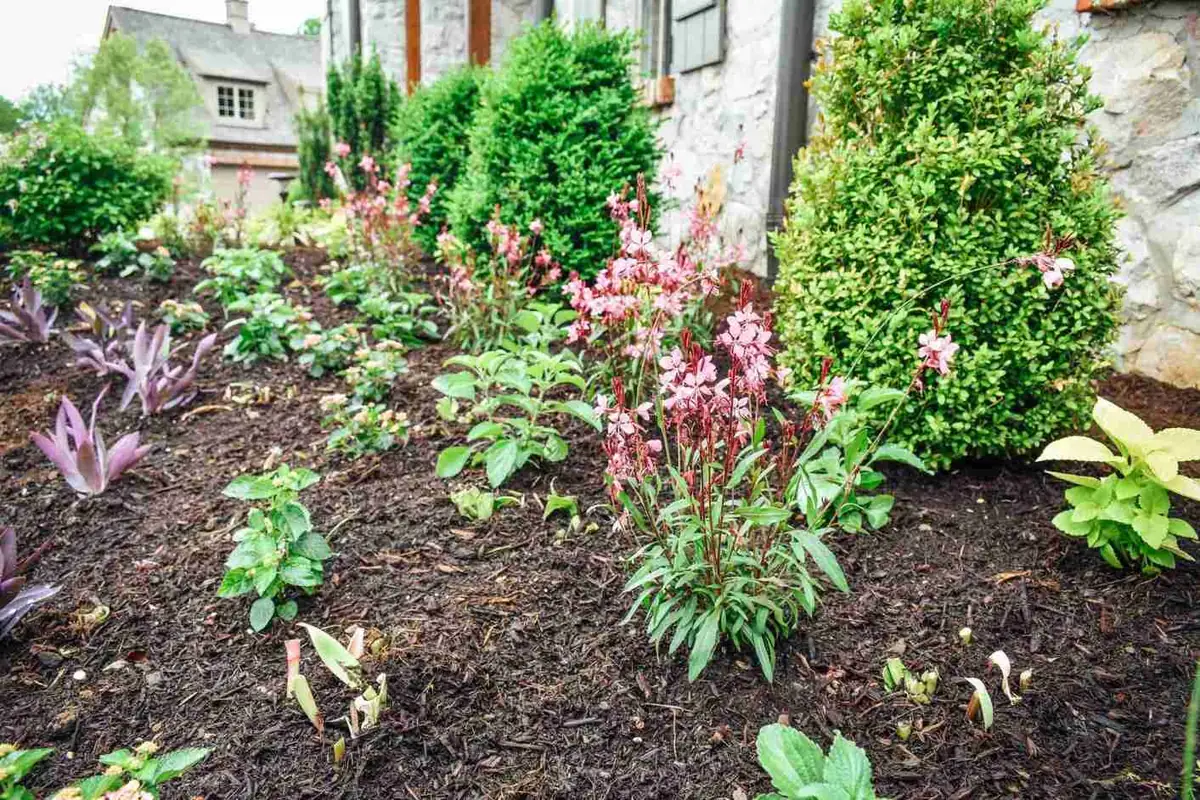
The single most common cause of tree and shrub failure is planting the wrong plant in the wrong place. A specimen that is suited to full sun planted in a shaded corner, or a shrub that needs well-drained soil placed in a low spot that collects water, will underperform regardless of how well it was planted. Site assessment before any planting decision is what separates a landscape that works from one that requires constant replacement.
A proper site assessment for fall planting covers:
- Sun exposure: Hours of direct sun through the day, accounting for any seasonal changes as deciduous trees lose canopy
- Drainage: Whether the area holds water after rain, drains freely, or sits in a naturally dry zone, each of which narrows the plant palette significantly
- Soil type: Chester County soils vary considerably, from the heavier clays of some lowland areas to the shallower, rockier profiles of elevated sites. Soil type affects water retention, drainage, and the need for amendment at planting
- Mature size: The most frequently overlooked factor. A shrub planted three feet from a foundation that reaches eight feet at maturity is a problem ten years away. Every planting decision should account for mature width and height, not nursery size
- Proximity to utilities and structures: Trees in particular need to be positioned with their eventual canopy spread in mind, clear of power lines, roof overhangs, and hardscape
The Penn State Extension planting guide notes that poor plant growth and death most often result from failure to follow correct planting procedures — and that site selection is the first step in that process.
Planting Technique and Bed Preparation
Even the right plant in the right place can struggle if the planting hole and bed preparation are not done correctly. The most common technical mistakes in fall planting are planting too deep, skipping mulch, and failing to water adequately through the establishment period.
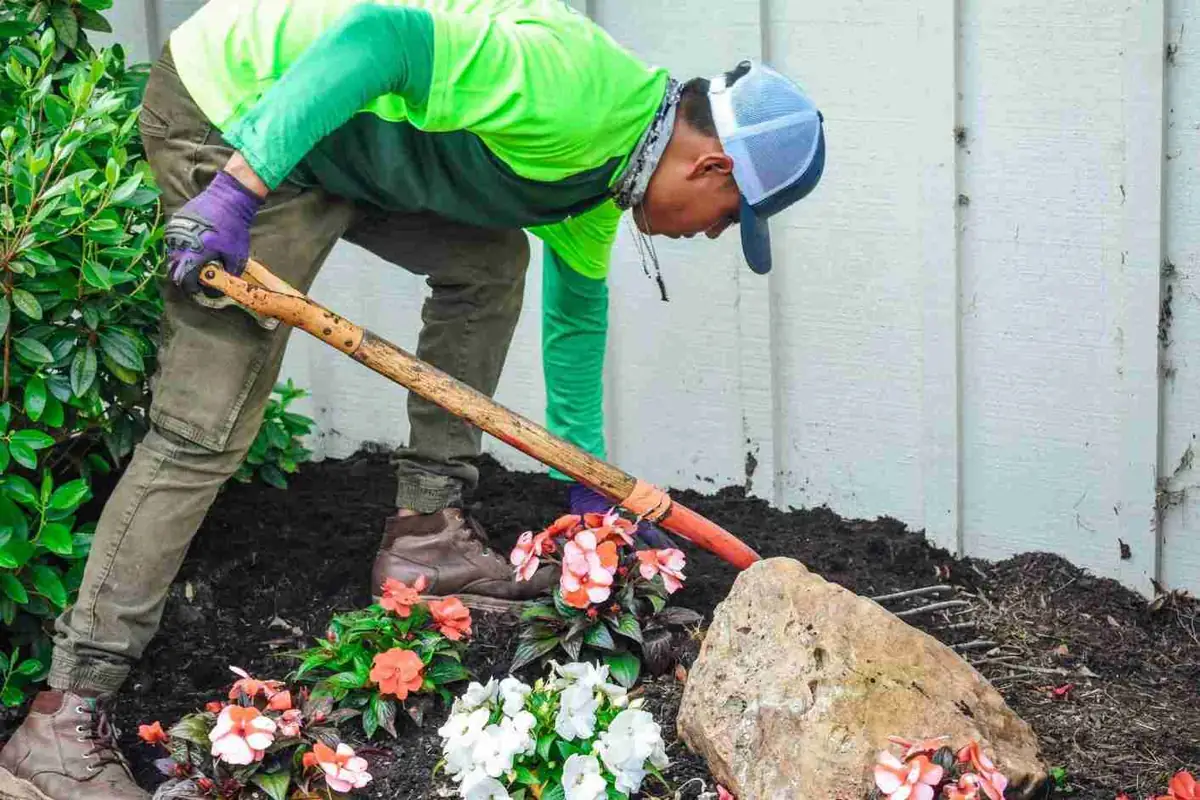
- Planting depth: The top of the root ball should sit at or slightly above the surrounding soil grade, never below it. Planting too deep restricts oxygen to the roots and leads to the gradual decline that is one of the most common causes of tree and shrub failure in residential landscapes
- Hole width: The planting hole should be two to three times the width of the root ball, with sloped sides rather than straight walls. Wide, shallow holes encourage roots to spread into the surrounding soil faster than deep narrow holes
- Backfill: Use the native soil as backfill rather than heavily amended material. Roots need to transition into the surrounding native soil, and a planting hole filled with rich amended mix can actually discourage roots from spreading outward
- Mulch: A two to three inch mulch ring extending to the drip line insulates the root zone through winter and retains moisture during dry fall periods. Keep mulch away from direct contact with the trunk or stem base
- Watering: Fall-planted specimens need regular deep watering through the establishment period, until the ground freezes. Dry falls are common in Chester County, and a newly planted tree or shrub cannot rely on rainfall alone
Plan Your Fall Planting with Pickel Landscape Group
The Pickel Landscape Group team has been designing and installing plantings across Chester County and northern Delaware since 2007. Every planting we do starts with a site assessment that looks at sun exposure, drainage, soil conditions, mature plant size, and how the specimen will contribute to the landscape over time. We work across Landenberg, West Chester, Kennett Square, Avondale, and Hockessin, and we know what grows well in this region and what the fall planting window looks like on the ground.
Browse our portfolio to see planting and landscape work across the region, and take a look at our full range of services to see how tree and shrub planting fits into a complete seasonal programme. If you have trees or shrubs on your list, the window is open now.
Request a planting consultation and we will assess your property, recommend species suited to your specific site conditions, and handle the installation from selection through to planting and establishment care.
Frequently Asked Questions About Fall Tree and Shrub Planting in Chester County
Contact Pickel Landscape Group
Ready to plan your fall planting? Our team serves Chester County and northern Delaware, including Landenberg, West Chester, Kennett Square, Avondale, and Hockessin.
Want a professional to take care of this for you? Learn more about our Tree & Shrub Planting service.
Related Articles
Plant This Fall, Bloom This Spring: A Guide to Bulb Installation in Chester County
Plant this fall, bloom this spring. Bulb installation in Chester County PA — layering, depths, and what full installation includes.
Read moreWhy the Best-Looking Fall Landscapes Were Booked in August
The best-looking fall landscapes in Chester County PA were planned a season ahead. Here is what should already be on your radar.
Read moreLate-Summer Landscape Refresh: Getting Your Outdoor Space Ready for Fall
Ready to refresh your Chester County landscape before fall? Here's where to start, from plantings to lighting to hardscape updates.
Read more