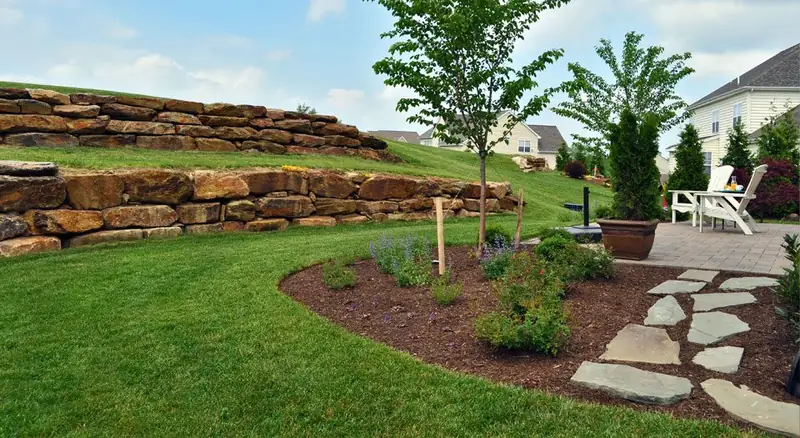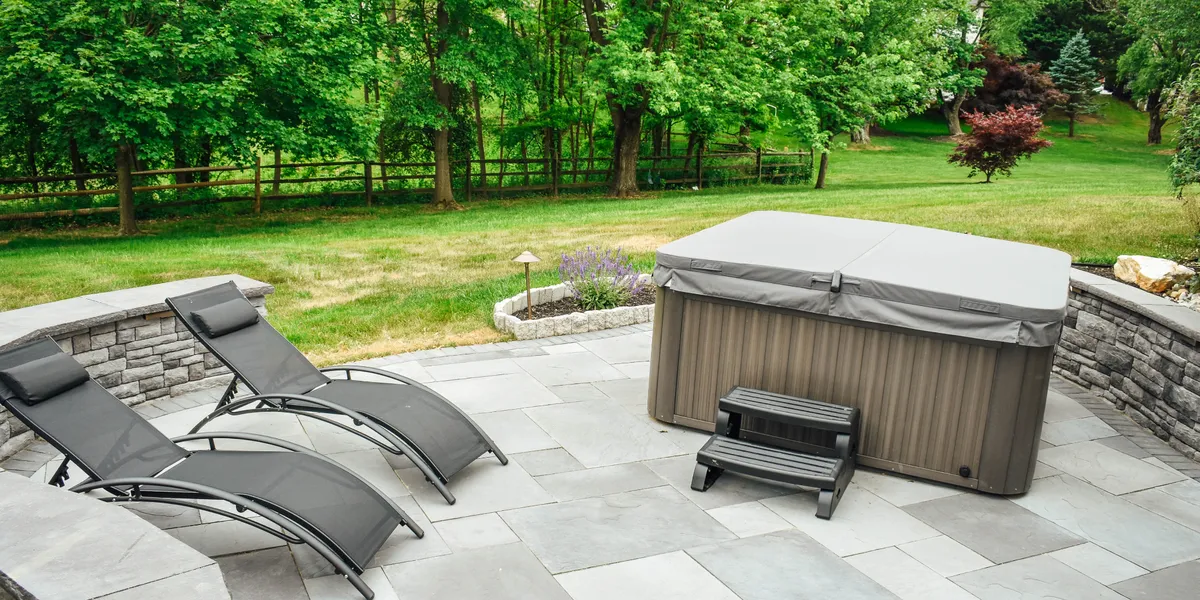
Winter hardscape care in Chester County PA starts before the first hard freeze. Patios, walkways and walls look solid, but they face real stress through the coldest months. Water slips into small gaps, freezes, expands and thaws again. Each cycle can nudge a surface out of place.
Good care keeps small movements from turning into big repairs. This guide explains what freezing and thawing does to hardscape and why the base and drainage matter most. It also lists simple steps you can take this winter.
What Does Freezing and Thawing Do to a Patio?
Water finds its way into joints, tiny cracks and the soil under a patio. When it freezes, it expands. When it thaws, it settles back. Repeat that cycle often enough and surfaces can shift, settle or heave.
Poured concrete tends to crack under this stress. Pavers behave differently. The Concrete Masonry and Hardscapes Association, which now includes the Interlocking Concrete Pavement Institute, explains that each paver shares the load with its neighbors. The system flexes with seasonal ground movement instead of cracking like a single slab.
Natural stone and walls also depend on what sits beneath them. That brings us to the part you cannot see.
Why Do the Base and Drainage Matter Most?
A properly prepared, compacted base keeps a hardscape stable. Good drainage moves water away before it can freeze under the surface. When either one is weak, water collects, freezes and pushes pavers or stones out of place.
CMHA also recommends enough slope in the paved surface to help water drain and carry away deicing materials. That is why Pickel Landscape Group builds drainage into every patio, walkway and wall from day one. ICPI certified professionals prepare each base to hold up through Chester County winters.
What Simple Winter Care Protects Your Hardscape?
A few small habits go a long way. Here is what we recommend.
Keep Drainage Paths Clear
Check downspout outlets, bed edges and low spots near your patio and walkways. Clear leaves and debris so melting snow and rain can leave the area. Water that stays put can freeze.
Sweep Away Debris
Brush leaves, dirt and organic matter off the surface. According to CMHA, material left on pavers over winter can stain them. A broom or leaf blower does the job.
Fix Small Problems Early
Uneven pavers create spots where water pools and freezes. A raised edge can also catch a shovel or snowblower. CMHA notes that minor movement can be corrected by lifting the pavers and adjusting the bedding sand. For anything more than a small shift, call a professional rather than guess.
Use Deicers Carefully
Deicers help, but more is not better. CMHA advises using only as much as the job needs and never in place of shoveling. Remove loosened snow and ice promptly so salt does not build up.
Product choice matters too. CMHA says standard rock salt, or sodium chloride, is the least damaging option for concrete pavers. It recommends avoiding magnesium chloride and calcium magnesium acetate. Always follow your paver manufacturer's guidance and the label directions.
Protect your plants as well. Penn State Extension warns that salty runoff can harm plantings, especially in soils that hold salt. Keep deicer on the surface that needs it and away from beds.
Sand can add traction on standard interlocking pavers. CMHA says it tops up the joint sand as the ice melts. Permeable paver systems need different care, so ask your installer before you use sand.
How Do You Know If an Older Patio or Wall Needs Attention?
Walk your hardscape after a freeze and look for warning signs. Here is what to watch for.
- Pavers that have sunk, lifted or rocked underfoot
- Joints that have widened or lost their sand
- Water that pools on the surface after rain or snowmelt
- Cracked or shifted stones
- Walls that lean, bulge or show gaps
If you notice any of these, winter is a good time to have the area assessed. A professional looks at the base, the drainage and the condition of joints and edges. Catching a problem now means it will not worsen when the spring thaw arrives.
Start Your Hardscape Assessment With Pickel Landscape Group
Pickel Landscape Group builds and cares for patios, walkways and walls across Chester County PA and northern Delaware. Browse our portfolio to see finished projects, and explore our hardscaping services. If an older hardscape is showing movement, request a consultation and we will assess it before spring.
Frequently Asked Questions About Winter Hardscape Care in Chester County PA
Do pavers crack in winter?
Pavers are made to flex with ground movement, so they hold up better than rigid slabs. If one is damaged, a professional can lift it and replace it without disturbing the rest.
Is rock salt safe for pavers?
CMHA says rock salt is the least damaging deicer for concrete pavers when used sparingly. Avoid magnesium chloride and calcium magnesium acetate, and follow your manufacturer's guidance.
Should I seal my patio before winter?
Sealers can reduce the water that enters joint sand and make stains easier to remove. CMHA describes them as helpful but not essential. Ask your installer whether a sealer suits your paver type.
Can I shovel snow off my patio?
Yes. Shoveling is the best way to clear snow, and it reduces the need for deicers. Level any raised pavers first, since a raised edge can catch a shovel or snowblower.
When should I have my hardscape assessed?
Have it assessed if you see sinking, shifting, pooling water or leaning walls. Winter is a good time because you can plan repairs before spring.
Contact Pickel Landscape Group
Ready to book a hardscape assessment? Our team serves Chester County and northern Delaware, including Landenberg, West Chester, Kennett Square, Avondale and Hockessin.
Related Articles
Make the Most of What's Left of Summer: Lighting, Planting & Landscape Enhancements
Extend your Chester County outdoor season with lighting, plantings, and small upgrades before fall. See where to start.
Read moreTop Patio Materials for Fall in Wilmington
Read moreFall Cleanup in Chester County PA and What Really Protects Your Lawn and Beds
Fall cleanup in Chester County PA protects your lawn and beds. Learn what to clear, what to leave and when to finish.
Read more